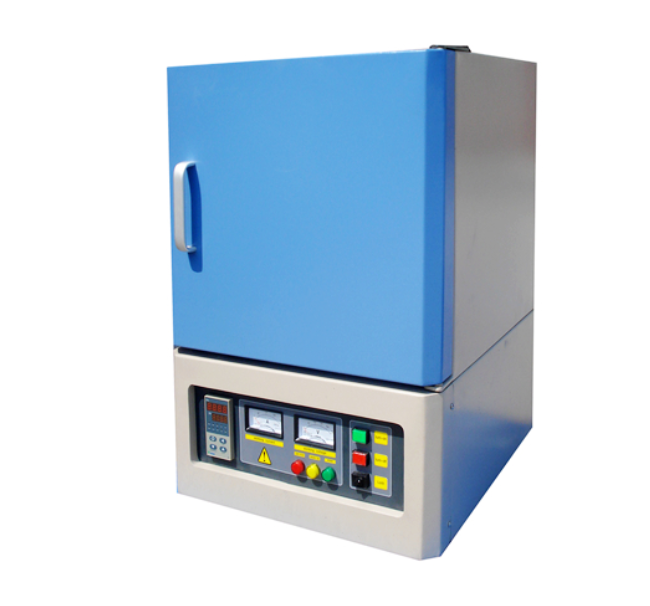
Ⅰ. Technical Specifications |
|
| Max. temperature | 1800℃ (<2hour) |
| Working temperature | 1750℃ |
| Standard Temperature controlling | ● PID automatic control via SCR (Silicon Controlled Rectifier) power control with phase anglefired, current limiting resistor. ● 30 programmable segments for precise control of heating rate, cooling rate, and dwell time. ● Built-in PID Auto-Tune function with overheating & broken thermocouple broken protection. ● Over-temperature protection and alarm allow for operation without an attendant. 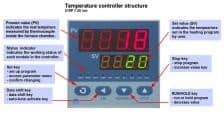 |
| Optional of Temperature controlling | ● Software (Furnace can be operated by PC by installing a control software) ● Touch screen temperature controller |
| Temperature accuracy | ±1℃ |
| Temperature Uniformity | ±5℃ over 120mm @ 1800℃ ±3℃ over 80mm @ 1700℃ |
| Heating rate | 0-15℃ /min |
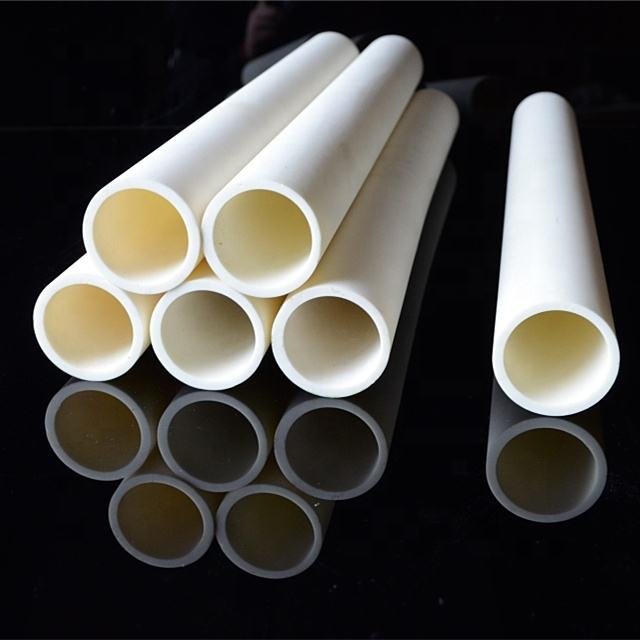
| Thermocouple | B type (Pt-Rh to Pt-Rh) with 99.7% purity Alumina tube |
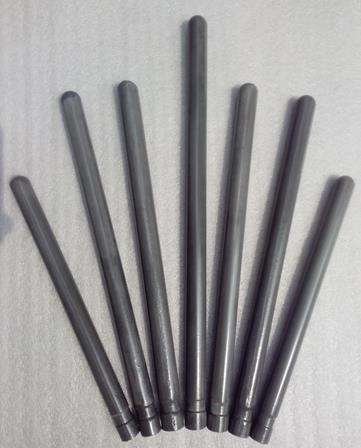
| Heating element | Super MoSi2 heating elements for muffle furnace 1800C |
| Muffle Furnace 1800 type Chamber | Three layers of ceramic fiber insulation materials ● First layer: 1900℃ ceramic fiber board. ● Second layer: 1700℃ ceramic fiber board. ● Third layer: 1260℃ ceramic fiber board. |
| Furnace structure | Double layer steel casing with dual cooling fan, surface temperature below 60℃ |
| Furnace door | ● Power cutting off when furnace door open |
| Warranty | ● One year limited warranty with lifetime support. (Consumable parts such as heating elements and crucibles are not covered by the warranty, please order the replacement at related products) ● ATTENTION: Any damages caused by the use of corrosive and acidic gases are not under the coverage of One Year Limited Warranty. |
| Certifications | CE |
Ⅱ. Application Notes |
|
| Using Attentions | ● The cooling rate of this muffle furnace 1800 type shall also not exceed 10℃ /min. ● Toxic or explosive gases are not recommended for use with this furnace without necessary safety controls and supervision. ● Small cracks may appear on the surface of the refractory ceramics over extended use. This is a normal occurrence and the cracks may be repaired with alumina coating. ● A refractory door block must be inserted before closing door. |
Muffle Furnace 1800C Standard Size:
| Type | Max. Temperature(℃) |
Furnace Chamber Size(mm) (Width x Height x Depth) |
Volume(L) | Rated Power(kw) |
| H-1800M-1 | 1800 | 100x100x100 | 1 | 2 |
| H-1800M-2 | 1800 | 120x120x130 | 2 | 4 |
| H-1800M-3 | 1800 | 150x150x150 | 3 | 5 |
| H-1800M-5 | 1800 | 150x150x200 | 5 | 6 |
| H-1800M-8 | 1800 | 200x200x200 | 8 | 8 |
| H-1800M-12 | 1800 | 200x200x300 | 12 | 10 |
| H-1800M-27 | 1800 | 300x300x300 | 27 | 12 |
| H-1800M-36 | 1800 | 300x300x400 | 36 | 15 |
| Note: | Special size for muffle furnace 1800C is customizable. | |||